Introduction
You just stepped out of a refreshing shower — and then it hits you. That sour, musty, mildewy smell rising up from your bath mat. It’s one of the most common bathroom complaints, yet most people have no idea why it keeps happening or how to fix it for good.
If you’ve been asking yourself, “How to stop bath mat from smelling”, you’re in exactly the right place. In this guide, we cover every possible cause of bath mat odors, 12 science-backed methods to eliminate the smell, and — most importantly — a foolproof prevention routine so the smell never comes back.
This isn’t a generic list of tips you’ve seen everywhere. We go deeper: understanding the biology of mold and mildew, explaining which cleaning agents actually kill odor-causing bacteria, and giving you a step-by-step maintenance system that takes less than 5 minutes a week.
Table of Contents
⚡ Quick Answer
To stop a bath mat from smelling, wash it with white vinegar and baking soda on a hot cycle, hang it to air-dry completely after every use, and never fold it wet. Mold and mildew trapped in damp fibers are the #1 cause of bath mat odors — and preventing moisture buildup is the permanent fix.
Did you know? A damp bath mat left on the floor for just 24 hours can begin developing mold spores. Most households wash their bath mat only once a month — but hygiene experts recommend washing it every 1–2 weeks for heavy use, and at a minimum every 3–4 weeks for light use.
Why Does My Bath Mat Smell? (Root Causes Explained)
Before you can fix the smell, you need to understand exactly what’s causing it. Bath mat odors don’t come from one single source — they come from a combination of moisture, biology, and bathroom environment. Here are the most common culprits:
| Cause | What Happens | Odor Severity |
|---|---|---|
| Mold & Mildew Growth | Moisture trapped in fibers or under the mat creates the perfect breeding ground for mold spores and mildew, producing that classic musty smell. | HIGH |
| Bacteria from Skin Contact | Dead skin cells, oils, and sweat transfer from bare feet to the mat every day. Bacteria feed on these organic materials and release foul-smelling compounds. | HIGH |
| Rubber or Latex Backing Off-Gassing | Low-quality rubber backings — especially PVC — can emit a chemical, rubbery odor that strengthens in heat and humidity. | MEDIUM |
| Detergent Residue Buildup | Using too much detergent without a thorough rinse leaves soapy residue in the fibers that traps bacteria and creates a sour, stale smell over time. | MEDIUM |
| Drying Too Slowly | A mat that stays damp for hours after washing or after bathroom use allows mold and bacteria to multiply rapidly in the wet fibers. | HIGH |
| Folding or Storing Wet | Folding a damp mat or storing it in a bag concentrates moisture and triggers extremely fast mold growth, especially in the center folds. | HIGH |
| Poor Bathroom Ventilation | Without airflow, the humidity level in a bathroom stays elevated for hours after a shower, keeping the mat continuously damp and mold-prone. | MEDIUM |
| Infrequent Washing | Washing less than once a month allows months of bacteria, skin cells, and moisture damage to accumulate — making odors very hard to remove. | LOW–HIGH (worsens over time) |
⚠ Health Warning
Mold and mildew on bath mats are not just cosmetic problems. Prolonged exposure to bathroom mold spores can trigger allergic reactions, respiratory irritation, and skin rashes — especially in children, the elderly, and people with asthma. If your mat has visible black or pink spots, treat it immediately or replace it.
How Bath Mat Odors Develop Over Time
Understanding the timeline of odor development helps you intervene before the smell becomes deeply embedded in the fibers. Here’s what happens to a bath mat that isn’t properly maintained:
- Day 1–3: Moisture from daily showers soaks into the mat. Bacteria begin colonizing the warm, damp fibers and rubber backing — but no smell is detectable yet.
- Day 4–7: Bacterial colonies grow larger. You may notice a faint sour or “wet dog” smell when you first step on the mat in the morning. Mold spores may begin forming on the underside near the backing.
- Week 2–3: The musty, mildewy odor becomes noticeable throughout the bathroom — not just when you step on the mat. Black or pink discoloration may appear at the mat’s edges or underside.
- Week 4+: The smell is deeply embedded in the fibers. A single regular wash cycle may no longer be enough to fully eliminate it. The backing may show visible mold growth.
The key insight here is that odors are always easier to prevent than to remove. Once mold has penetrated deep into the chenille pile or gotten beneath a rubber backing, you need targeted cleaning methods — which brings us to the 12 proven solutions below.
12 Proven Methods on How to Stop Bath Mat from Smelling Fast
These methods are ranked from the most immediately effective to the best long-term prevention strategies. For severe odors, we recommend combining methods 1, 2, and 3 for a single powerful deep-clean treatment.
White Vinegar Wash Natural
White vinegar is arguably the single most effective natural solution for eliminating bath mat odors. Its acetic acid content kills up to 82% of mold species and neutralizes odor-causing bacteria without the harsh chemicals that can damage mat fibers or rubber backings over time.
How to use it: Add 1 cup (240ml) of plain white vinegar directly to your washing machine drum — not the detergent drawer — and run the mat on a hot wash cycle (60°C/140°F). Do not use laundry detergent in the same cycle; vinegar and detergent cancel each other out. For a very smelly mat, do a pre-soak first: submerge the mat in a basin of warm water with 2 cups of vinegar for 30–60 minutes before machine washing.
💡 Pro Tip
Don’t worry about a vinegary smell on your mat after washing — the acidic odor completely disappears once the mat dries. What remains is clean, odor-free fibers.
Baking Soda Treatment Natural
Baking soda (bicarbonate of soda) is a powerful odor absorber, not just a masker. Unlike air fresheners that simply cover smells, baking soda’s alkaline chemistry neutralizes the acidic compounds produced by bacteria and mold, eliminating the smell at its source.
Dry method: Sprinkle a generous layer of baking soda over the entire mat surface. Work it into the pile with your hands or a soft brush. Leave it for a minimum of 30 minutes — ideally overnight. Shake off and vacuum before washing. This works particularly well for spot-treating specific smelly areas.
Wash method: Add ½ cup of baking soda directly to the drum along with your regular detergent. This boosts the cleaning power of any detergent and helps neutralize embedded odors during the wash cycle. For maximum effectiveness, combine this with the vinegar soak before the wash (not during the same cycle).
Hot Water Wash (60°C / 140°F) Most Effective
Temperature is one of the most overlooked factors in bath mat cleaning. Cold or warm washes (30–40°C) are often insufficient to kill the bacteria and mold that cause odors. A hot wash at 60°C (140°F) kills the vast majority of bacteria, mold spores, and dust mites living in your mat’s fibers.
Always check your mat’s care label first. Most cotton and chenille bath mats tolerate a 60°C wash well. Memory foam mats and mats with delicate rubber backing may require a cooler setting to avoid damage — for these, use the vinegar pre-soak method instead and wash at the maximum temperature the label allows.
⚠ Important
Never wash a mat with a PVC or hot-glue rubber backing at high temperatures repeatedly — high heat accelerates backing deterioration. Mats with quality TP Rubber or hot-melt adhesive backing are more heat-tolerant and designed for frequent machine washing.
Hydrogen Peroxide Spray Fast Acting
3% hydrogen peroxide (the standard brown-bottle variety from any pharmacy) is an excellent anti-mold and anti-bacterial agent that’s safe for most bath mat fabrics. It breaks down into water and oxygen when it reacts with organic matter, leaving no chemical residue.
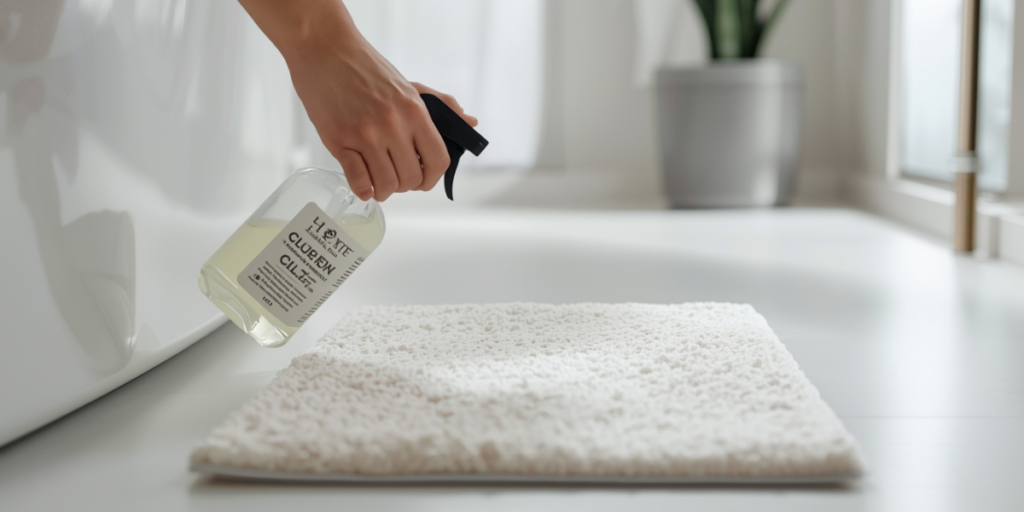
How to use: Pour 3% hydrogen peroxide into a spray bottle. Flip the mat upside down and generously spray the rubber backing and the underside of the pile — this is where most mold growth begins. Let it sit for 10–15 minutes, then rinse thoroughly. Also, spray the top surface, scrub gently with a soft brush, and rinse before putting it in the washing machine. Do not mix with vinegar — use one or the other.
Proper Air Drying After Every Use
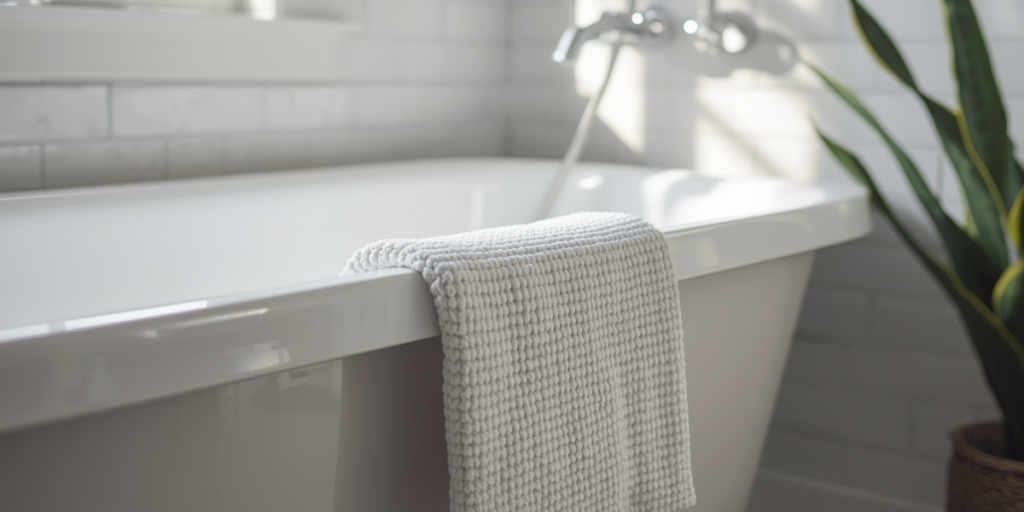
This is the single most impactful daily habit you can build — and it costs nothing. After every shower or bath, hang your bath mat over the edge of the tub, a towel rail, or a shower door to allow airflow on both sides. Never leave it flat on the floor while still wet.
A bath mat left flat on the floor after a shower takes 4–8 hours to dry naturally (longer in a poorly ventilated bathroom). During that time, the underside — pressed against the floor with zero airflow — develops mold at an accelerated rate. Hanging it doubles the drying speed and dramatically cuts mold growth.
💡 Quick Win
If you can’t hang it easily, just fold it in half over the tub edge with the rubber side outward. This exposes the interior pile to air and is significantly better than leaving it flat.
Wash More Frequently (The Right Schedule)
Most people dramatically under-wash their bath mats. Here’s the recommended washing frequency based on household use — following this schedule alone will eliminate most chronic odor problems:
- 1–2 person household, light use: Wash every 3–4 weeks
- 2–4 person household, regular use: Wash every 1–2 weeks
- Family with children or heavy use: Wash every week
- Guest bathroom (infrequent use): Wash monthly; shake and air after each guest visit
- After illness in the household: Wash immediately on a hot cycle
Clean the Floor Underneath Regularly
Here’s something many people forget: if your bathroom floor is dirty, damp, or has mold growing on it, your bath mat will absorb and re-cultivate those odors, no matter how many times you clean the mat itself. The floor and the mat form an ecosystem — you need to clean both.
Once a week, lift your mat completely off the floor, spray the area underneath with a bathroom disinfectant or diluted white vinegar solution, wipe clean, and allow it to fully dry before replacing the mat. Pay special attention to grout lines near the mat, where mold commonly hides.
Tea Tree Oil Treatment Natural
Tea tree oil is a natural antifungal and antibacterial agent with scientifically documented effectiveness against common bathroom mold strains, including Aspergillus and Penicillium. Unlike bleach, it won’t damage mat fibers or discolor colored rugs.
How to use: Add 15–20 drops of 100% pure tea tree essential oil to 2 cups of warm water in a spray bottle. Shake well and spray evenly over the mat. Focus on the underside and any areas with visible discoloration. Leave for 20 minutes without rinsing, then wash as normal. You can also add 10 drops directly to your washing machine drum with your regular detergent for an antimicrobial boost on every wash.
Improve Bathroom Ventilation
No cleaning routine will permanently eliminate bath mat smells if your bathroom stays humid for hours after every shower. High humidity is the single biggest environmental factor in mold growth — and it directly impacts how quickly your mat dries between uses.
Practical steps to reduce bathroom humidity:
- Run your bathroom exhaust fan during every shower AND for 15–20 minutes after finishing
- Leave the bathroom door ajar after showering to allow humid air to escape
- Open a window when possible — even 5 minutes of fresh airflow makes a significant difference
- Consider a small bathroom dehumidifier if your bathroom has no window and inadequate ventilation
- Wipe down wet shower walls and the wet area around the tub after bathing
Enzyme-Based Laundry Cleaner
For mats with stubborn, deeply embedded odors that vinegar and baking soda alone haven’t resolved, enzyme-based laundry cleaners are the next step up. These products contain biological enzymes (proteases, lipases) that literally break down the organic compounds — bacteria, skin oils, mold by-products — that create the smell at a molecular level.
Look for products labeled “bio” or “biological” detergent, or specialty odor-eliminating products designed for sports or gym clothing (these are formulated for exactly the kind of bacterial odors bath mats develop). Use according to the product instructions and wash at the highest temperature safe for your mat type.
Sunlight Drying Free & Natural
Direct sunlight is a free, powerful, and completely natural mold and bacteria killer. UV rays from the sun damage the DNA of microorganisms, including mold spores and bacteria, effectively sterilizing the mat surface. For mats with a lingering smell after washing, hanging them in direct sunlight for 2–4 hours is often all that’s needed to finish the job.
Additionally, sunlight accelerates drying — a mat that takes 3–4 hours to air-dry indoors may fully dry in 45–60 minutes in good sunlight and a light breeze. This fast drying further prevents mold from re-establishing during the drying process.
💡 Tip
Alternate which side faces the sun halfway through drying to ensure both the pile and the rubber backing get full UV exposure.
Odor-Eliminating Spray Between Washes
Between full wash cycles, a regular spray-down with an odor-eliminating spray keeps smells from building up. This is especially useful in high-humidity bathrooms or for households with heavy use where weekly washing isn’t always practical.
DIY spray recipe: Mix equal parts white vinegar and water in a spray bottle. Add 10 drops of tea tree oil and 5 drops of lavender essential oil (optional, for fragrance). Lightly mist the mat surface 2–3 times per week, then hang to air-dry. This costs pennies and takes 30 seconds — but consistently used, it dramatically extends the time between full washes while keeping smells in check.
Step-by-Step Deep Cleaning Guide for a Severely Smelly Bath Mat
If your mat has developed a strong, persistent odor — the kind that remains even after a normal machine wash — follow this comprehensive deep-cleaning protocol. This process combines the most effective methods above into a single powerful treatment.
- Inspect the mat — Check both sides for visible mold (black, green, or pink spots). If more than 30% of the surface has visible mold growth, the mat should be replaced rather than cleaned.
- Dry pre-treatment — Take the mat outside if possible. Sprinkle baking soda generously over both sides. Use a soft scrubbing brush to work it into the pile and along the rubber backing. Leave for 1–2 hours.
- Vinegar soak — Fill a bathtub or large basin with warm water. Add 2–3 cups of white vinegar. Submerge the mat and soak for 30–60 minutes. This step begins killing mold and bacteria before the wash.
- Spot-treat stubborn areas — While the mat is soaking, spray any visibly stained or discolored areas with undiluted 3% hydrogen peroxide. Scrub gently with a brush. Rinse with clean water.
- Machine wash — Wash alone (no other laundry) on the hottest cycle the care label allows. Add ½ cup of baking soda to the drum. Use a biological detergent. Add 10 drops of tea tree oil to the fabric softener compartment.
- Extra rinse cycle — Run an additional rinse-only cycle to ensure all detergent residue is fully removed. Residue left in fibers will attract bacteria and cause the mat to smell faster.
- Dry in direct sunlight — Hang the mat outside in direct sunlight if at all possible. Allow to dry completely — this means no damp smell when you press your face into the pile. Bringing a still-damp mat back inside is one of the most common reasons smells return.
💡 Important
A mat that still smells after this full process most likely has mold embedded in the rubber backing itself — not just the fibers. At this point, replacement is usually the more cost-effective and hygienic option.
How to Prevent Bath Mat Smell Permanently
Cleaning is reactive. Prevention is proactive — and far more effective. Build these habits into your bathroom routine and you’ll find your bath mat stays fresh between washes almost indefinitely.
🪟
Ventilate After Every Shower
Run the extractor fan 20 min after showering. Open windows or doors to flush humid air out of the bathroom.
🪝
Hang Mat After Use
Never leave the mat flat on a wet floor. Hang over the tub edge or a rail after every shower to allow both-sided airflow.
🗓
Wash Every 1–2 Weeks
Most households should wash their bath mat fortnightly, not monthly. Households with heavy use should wash weekly.
🧹
Clean the Floor Too
Lift the mat weekly and clean the floor beneath it. Mold on the floor transfers directly into the mat backing.
☀️
Sun-Dry Monthly
Once a month, hang the mat in direct outdoor sunlight for 2+ hours. UV rays kill mold spores naturally.
🧴
Spray Between Washes
Use a diluted white vinegar + tea tree oil spray 2–3x per week. Takes 30 seconds and prevents bacterial buildup.
🛒
Tip: Choosing a mat with a TP Rubber or hot-melt adhesive backing (rather than PVC) makes a significant difference in odor prevention. Quality rubber backings don’t trap moisture as easily as PVC, and they survive frequent hot washes that are necessary to kill bacteria. See our 5 Best Chenille Bath Mats review for our top picks that are specifically designed to resist mold and odors.
Smell Issues by Bath Mat Type
Different bath mat materials have different odor tendencies and require slightly different care approaches. Here’s what you need to know based on your mat type:
Chenille & Microfiber Bath Mats
Chenille mats are the most popular type — and they’re prone to odors primarily because their thick, densely packed fibers hold moisture deep inside the pile. The good news: Chenille is highly machine-washable and responds very well to the vinegar and baking soda methods. The key is to ensure the pile fully dries after washing — a thick chenille mat can feel dry on the surface while remaining damp in the middle, so always allow extra drying time.
Rubber-Backed Bath Mats
The rubber or latex backing is often where the most persistent odors live. Rubber is porous enough to trap moisture and bacteria but difficult to thoroughly clean with a standard wash. For rubber-backed mats, the hydrogen peroxide spray treatment applied directly to the backing before each wash is particularly important. Avoid fabric softener — it coats rubber surfaces and actually reduces grip while trapping moisture.
Memory Foam Bath Mats
Memory foam mats cannot be machine-washed in most cases — the high spin cycle can break down the foam structure. Instead, hand-wash with mild detergent and cold water, or spot-clean with a vinegar-water spray. Always dry flat (not hung) to prevent distortion, and ensure the foam dries completely — memory foam retains moisture exceptionally well and is highly prone to internal mold growth if not dried thoroughly.
Cotton & Woven Bath Mats
Cotton mats are generally the easiest to keep odor-free — they tolerate hot washes very well (up to 60°C), dry relatively quickly, and don’t have rubber backings that complicate the cleaning process. The main challenge with cotton is that it tends to pill and lose its absorbency over time, which can trap moisture in worn areas.
Bamboo Slatted Bath Mats
Wooden or bamboo slat mats are uniquely resistant to mold compared to fabric mats because water drains through the slats rather than being absorbed. However, the wood itself can develop a musty smell if consistently wet. Clean monthly with a solution of warm water, white vinegar, and a few drops of tea tree oil. Allow to fully dry after every use — standing water between the slats can cause warping and mold in the wood grain.
When to Replace Your Bath Mat
Even the best cleaning routine has its limits. Sometimes a bath mat has reached the end of its useful, hygienic life — and continuing to use it creates more problems than it solves.
Replace your bath mat if you notice any of the following:
- Visible mold covering more than 20–30% of the surface or backing — even after deep cleaning
- A persistent musty or sour smell that returns within 1–2 days of washing
- Rubber backing that is cracked, peeling, or crumbling — this creates perfect mold-harboring gaps
- Discoloration that doesn’t respond to cleaning (dark staining embedded in the fibers)
- The mat no longer dries within a reasonable time after washing (signs of fiber breakdown)
- The mat has been in use for more than 2 years, with regular heavy use
⚠ Don’t Skimp Here
A visibly moldy bath mat is a genuine health risk — not just an aesthetic problem. Mold exposure through daily barefoot contact has been linked to skin fungal infections, nail fungus, and respiratory irritation. If deep cleaning hasn’t resolved the problem, replacement is the right decision.
FAQs
How do I get the musty smell out of a bath mat that can’t be machine washed?
For non-machine-washable mats (such as memory foam or certain bamboo mats), the most effective approach is: (1) spray generously with a 50/50 white vinegar and water solution; (2) sprinkle baking soda on top and allow it to fizz and react for 20–30 minutes; (3) scrub gently with a soft brush; (4) rinse with clean water using a shower head or hose; (5) hang or lay flat in direct sunlight to dry completely. Repeat if necessary.
Why does my new bath mat smell like rubber or chemicals?
New bath mats — especially those with rubber or PVC backings — often have a chemical, rubbery, or plastic smell when first unpackaged. This is called off-gassing: the release of volatile organic compounds (VOCs) from the backing material during manufacturing and storage.
Is it safe to use a smelly bath mat?
A mildly musty smell from infrequent washing is generally low risk for healthy adults, but it does indicate bacterial and mold growth that should be addressed promptly. For households with children, the elderly, pregnant women, or people with respiratory conditions or weakened immune systems, a smelly bath mat represents a more significant health concern.
What is the best way to dry a bath mat after washing?
The best method is to tumble dry on a low heat setting — this is faster, more thorough, and less likely to leave the mat slightly damp compared to air drying. If your mat has a delicate rubber backing, use a no-heat/air-dry tumble setting or air-dry instead. For air drying, always hang the mat rather than laying it flat — hanging allows airflow on both sides and reduces drying time by 40–60%. In good weather, hang outdoors in direct sunlight for the fastest and most hygienic result.
How can I stop my bath mat from smelling between washes?
The most effective between-wash odor prevention strategies are: (1) hang the mat after every use — this is the single biggest factor; (2) spray with diluted white vinegar 2–3 times per week; (3) improve bathroom ventilation to reduce ambient humidity; and (4) clean the floor underneath the mat weekly. If you implement all four, most bath mats can go 2–3 weeks between full washes without developing noticeable odors.
✅ Conclusion: The Simple System That Keeps Your Bath Mat Fresh Forever
Learning how to stop bath mat from smelling really comes down to understanding one core principle: moisture is the enemy. Every odor-causing mechanism — mold growth, bacterial colonization, mildew buildup — requires moisture to thrive. Eliminate persistent dampness from the equation, and you eliminate the smell.
Here’s the simple maintenance system in summary:
- Daily: Hang the mat after every shower to air dry on both sides
- 2–3x per week: Light spray with diluted white vinegar + tea tree oil solution
- Weekly: Lift and clean the floor underneath the mat
- Every 1–2 weeks: Full machine wash with hot water, baking soda, and white vinegar
- Monthly: Sun-dry for 2+ hours in direct sunlight for a natural deep refresh
Follow this system consistently, and you’ll never need to search “how to stop bath mat from smelling” again. Your bathroom will smell cleaner, your family will be healthier, and your bath mats will last significantly longer.