
Introduction
If you have been thinking about upgrading your bathroom with a bidet, the very first question that comes to mind is simple: can you install a bidet on any toilet? The honest answer is — almost, but not every single one. Most standard toilets in homes across the United States are completely compatible with modern bidet seats and bidet attachments. However, a few toilet designs create challenges that you need to know about before you spend a single dollar.
This guide gives you everything — toilet compatibility explained clearly, the three measurements you must take before buying, a full step-by-step installation walkthrough, the mistakes to avoid, and answers to the most commonly asked questions. By the time you finish reading, you will know exactly whether your toilet supports a bidet and exactly how to install one yourself without calling a plumber.
Table of Contents
1. Quick Answer: Can You Install a Bidet on Any Toilet?
Yes — in most cases you can install a bidet on your existing toilet. The overwhelming majority of two-piece toilets and standard one-piece toilets are fully compatible with bidet seats, bidet attachments, and handheld bidet sprayers. Modern bidets are specifically engineered to work with the most common toilet shapes and sizes found in American homes, making installation a straightforward DIY project that takes under 30 minutes for most people.
That said, a small number of toilet designs do create real compatibility problems. Tankless toilets, certain wall-hung toilets, and one-piece toilets with a deeply curved “French curve” design may require specialty adapters or may not support a standard bidet at all. Understanding your toilet type before you shop is the single most important step you can take.
Key takeaway: If you have a standard two-piece toilet with a round or elongated bowl, you can install a bidet today with zero plumbing experience and zero extra tools beyond a basic screwdriver.
2. Toilet Types and Bidet Compatibility
Every toilet falls into one of several categories. Here is exactly how each type interacts with bidet installation:
Two-Piece Toilets — Best Compatibility
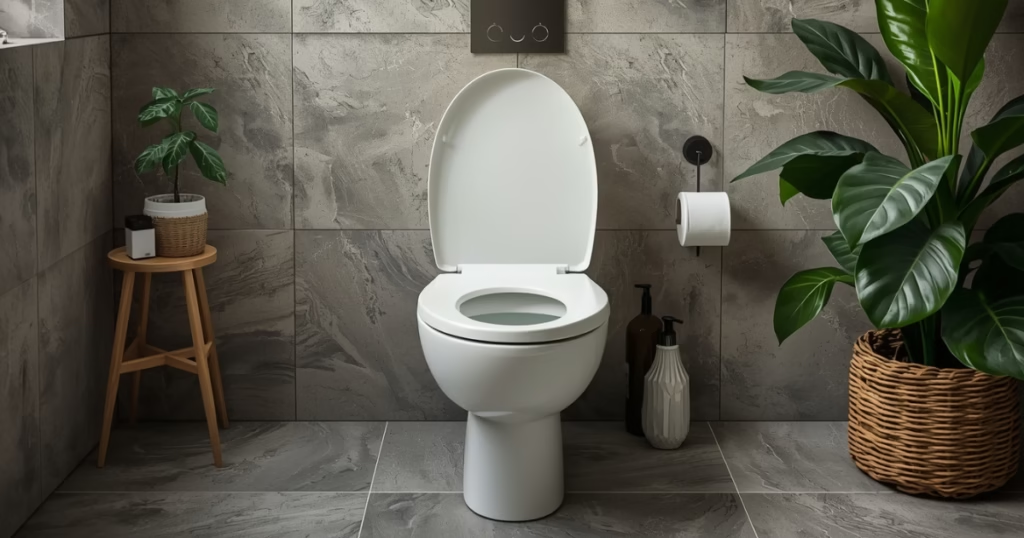
A two-piece toilet has a separate tank and bowl bolted together. This is by far the most common toilet style in American homes, and it offers the best bidet compatibility of any design. The fill valve under the tank is easy to reach, bolt hole spacing follows standard dimensions, and the bowl rim is flat — all of which make bidet attachment a smooth, simple process. If you own a two-piece toilet, virtually every bidet model on the market will work for you.
Standard One-Piece Toilets — Very Good Compatibility
A one-piece toilet has its tank and bowl fused into a single seamless unit. Most one-piece toilets with a flat area at the rear of the bowl install bidets just as easily as two-piece models. The main thing to watch for is whether your one-piece toilet has enough clearance between the mounting bolt holes and the front of the tank. If it does, you are good to go.
French Curve One-Piece Toilets — Check Before You Buy
Some premium one-piece toilets feature a dramatic curved contour — called a French curve — running from the tank down to the bowl. This curved shape can block the mounting brackets used by most bidet seats, leaving no flat surface for the bidet to sit on. If your toilet has this design, you need to either measure the clearance carefully or contact your bidet manufacturer to confirm which models work with your specific toilet.
Wall-Hung Toilets — May Need Extra Steps
Wall-hung toilets have their tank hidden inside the wall, with only the bowl visible. Many bidet attachments and handheld sprayers can still work on these, but installation is more involved. You may need a specialty mounting kit or a licensed plumber, depending on your setup. Always check the bidet manufacturer’s compatibility notes for wall-hung designs before purchasing.
Tankless Toilets — Generally Not Compatible
Tankless toilets connect directly to a high-pressure water supply without a tank. Because standard bidet seats rely on tapping into the fill valve of a toilet tank through a T-valve connection, tankless toilets are generally incompatible with most bidet seat models. A handheld bidet sprayer connected at the shutoff valve may still be an option, but check carefully first.
Toilets with Built-In Bidets — Already Done
If your toilet came with an integrated bidet function from the factory, there is nothing to install. These smart toilet units already include all bidet features built directly into the unit.
3. Types of Bidets You Can Install
Knowing which type of bidet you want also affects whether it will work on your toilet. Here is a clear breakdown:
Bidet Seat (Electric)
An electric bidet seat replaces your existing toilet seat entirely. It plugs into a standard GFCI outlet and offers premium features, including warm water washing, heated seat, adjustable spray pressure, rear and front wash modes, and warm air drying. Electric bidet seats come in round and elongated sizes to match your bowl. The only requirement beyond toilet compatibility is a nearby grounded GFCI electrical outlet — typically within four feet of the toilet.
Bidet Seat (Non-Electric)
A non-electric bidet seat also replaces your toilet seat but requires no power at all. It connects only to your cold water supply line and provides an adjustable cold water spray. These are ideal for bathrooms without a convenient outlet and are typically more affordable than electric models. Installation is often even faster since there are no electrical considerations.
Bidet Attachment
A bidet attachment is a slim panel that installs between your existing toilet seat and the bowl — you keep your original seat. These are the most affordable bidet options, frequently available for under $50, and they fit the vast majority of round and elongated toilets. Installation takes as little as 10 minutes. This is an excellent choice for first-time bidet users or for anyone on a tighter budget.
Handheld Bidet Sprayer
A handheld sprayer — sometimes called a bidet shattaf or bidet shower — connects to your toilet’s water supply line and mounts on the wall or tank beside the toilet. It requires no electricity, no seat removal, and works with nearly any toilet, including many wall-hung designs. It offers excellent flexibility and is especially popular in households with children or for personal hygiene needs beyond basic toilet use.
Freestanding Bidet
A freestanding bidet is a completely separate fixture installed beside your toilet, requiring its own dedicated water supply lines and drain connection. Professional plumbing installation is mandatory for this type. While freestanding bidets offer the most traditional bidet experience, they require significant bathroom space and renovation work, making them far less practical for most homeowners looking to upgrade an existing bathroom.
4. Three Critical Measurements Before You Buy
Before purchasing any bidet seat or attachment, take these three measurements from your toilet. They take less than five minutes and will prevent any compatibility problems entirely.
Measurement 1 — Bowl Length (Shape Check)
Find the two mounting bolt holes at the rear of the bowl where your toilet seat is attached. Measure from the center of those bolt holes straight to the very front of the bowl rim.
- Round bowl: approximately 16.5 inches
- Elongated bowl: approximately 18.5 inches
Always purchase a bidet seat or attachment that matches your bowl shape — round for round, elongated for elongated. Mismatching creates overhang, poor fit, and potential damage.
Measurement 2 — Bolt Hole Spacing
Measure the distance between the centers of the two seat mounting bolt holes.
- Compatible range: 5.5 inches to 7.5 inches
The vast majority of American toilets have bolt holes spaced at exactly 5.5 inches. If your measurement falls significantly outside the 5.5 to 7.5 inch range, your toilet may have unusual dimensions that require a specialty bidet or mounting adapter.
Measurement 3 — Tank Clearance
Measure from the center of the bolt holes forward to the front face of the toilet tank.
- Minimum required clearance: 1.5 inches
This is the most commonly overlooked measurement. Bidet seats need this minimum space between the mounting hardware and the tank. One-piece toilets and French curve designs are most likely to have tight clearance here. If yours is under 1.5 inches, look for slim-profile bidet models designed specifically for low-clearance toilets.
Pro tip: Remove your existing toilet seat before measuring. It gives you direct access to the bolt holes and makes all three measurements faster and more accurate.
5. Step-by-Step Bidet Installation Guide
Installing a bidet seat or attachment is one of the most beginner-friendly home improvement projects available. Here is exactly how to do it:
What You Will Need
- Phillips-head screwdriver
- Adjustable pliers or wrench (for snugging connections)
- Teflon (plumber’s) tape
- A small towel or bucket for residual water
Installation Steps
Step 1 — Shut off the water supply. Locate the shutoff valve on the wall behind or below your toilet. Turn it clockwise until fully closed. Then flush the toilet once and hold the handle down until the tank drains completely.
Step 2 — Remove the existing toilet seat. Unscrew the two bolts at the rear of the bowl using your screwdriver. Lift the old seat off and set it aside. Clean the toilet rim around the bolt holes thoroughly before continuing.
Step 3 — Install the mounting plate. Place the bidet seat’s mounting plate directly over the bolt holes. Slide it into position so the bolt slots align, insert the mounting bolts through the plate, and tighten them firmly. The plate should not rock or shift at all when pressed — a secure mount prevents seat movement during use.
Step 4 — Attach the bidet seat. Slide the bidet seat onto the mounting plate from the back, pushing forward until you hear or feel it click into the locked position. Give it a gentle tug to confirm it is secure.
Step 5 — Install the T-valve. Disconnect the water supply hose from the fill valve at the bottom of the toilet tank — have your towel ready to catch the small amount of residual water. Insert the T-valve between the fill valve and the supply hose. The T-valve splits the water flow to feed both the toilet tank and the bidet. Wrap all threaded connections with two layers of Teflon tape before attaching, then tighten by hand plus a quarter turn with pliers.
Step 6 — Connect the bidet hose. Attach the bidet’s water supply hose from the open port on the T-valve to the inlet on the bidet seat. Tighten all connections firmly, but do not overtighten — hand-tight plus a quarter turn is sufficient. Overtightening can crack plastic fittings.
Step 7 — Restore water and check for leaks. Slowly turn the shutoff valve counterclockwise to restore the water supply. Watch every connection point carefully as the tank fills. If any connection drips, turn the water off immediately, dry the connection, add more Teflon tape, and retighten before restoring water again.
Step 8 — Plug in and test (electric models only). For electric bidet seats, plug the power cord into the nearest GFCI outlet. Wait for the seat to initialize, then run through the spray functions — rear wash, front wash, pressure adjustment — to confirm everything operates correctly.
Total installation time for most people: 15 to 30 minutes.
6. Common Bidet Installation Mistakes to Avoid
- Not measuring the bowl shape first. Purchasing an elongated bidet for a round toilet creates front overhang and a poor fit. Always confirm round versus elongated before ordering.
- Skipping the tank clearance measurement. This is the single most common reason bidet seats do not fit one-piece toilets. A measurement under 1.5 inches means you need a low-clearance model.
- Installing an electric bidet without a GFCI outlet nearby. Plugging an electric bidet seat into a non-GFCI outlet is a building code violation and a genuine shock hazard. If your bathroom lacks a GFCI outlet, hire an electrician to install one before purchasing an electric model.
- Overtightening the T-valve connections. Plastic fittings crack easily under excessive force. Hand-tight plus a quarter turn with pliers is always enough. If a connection leaks after that, use more Teflon tape rather than more torque.
- Assuming all one-piece toilets are the same. Standard flat-back one-piece toilets install bidets easily. French curve one-piece designs do not. Never assume — always measure clearance and check the manufacturer’s compatibility guide.
- Buying a bidet without checking outlet proximity. Electric bidet seats come with power cords ranging from 4 to 5 feet. Measure the distance from your toilet to the nearest outlet before purchasing to confirm the cord will reach comfortably.
7. Frequently Asked Questions
Do you need a plumber to install a bidet?
No — not for bidet seats, bidet attachments, or handheld sprayers. These products are specifically designed for DIY installation requiring only a screwdriver and about 15 to 30 minutes of your time. A plumber is only necessary if you are installing a freestanding bidet, which requires dedicated water supply lines and a drain connection.
What is a French curve toilet and why does it matter?
A French curve is a design feature on some premium one-piece toilets where the surface between the tank and bowl is sharply curved or contoured rather than flat. This curve physically blocks the mounting brackets of most bidet seats, leaving no stable flat surface to mount against. If your toilet has a deep French curve, contact the bidet brand directly with your toilet’s make and model to identify compatible options.
Is bidet water clean and sanitary?
Yes. The water used by all bidet seats and attachments comes directly from the same clean municipal or well water supply that feeds your toilet tank, bathroom sink, and shower. Bidets use no water from inside the toilet bowl. The water is completely clean and identical to your household tap water.
Do bidet seats require electricity?
Only electric models do. Electric bidet seats plug into a standard GFCI outlet and power features like heated water, heated seat, air dryer, and night light. Non-electric bidet attachments and non-electric bidet seats operate entirely on water pressure alone — no outlet, no cord, no electrical requirements whatsoever.
How much does a bidet cost to install?
A basic non-electric bidet attachment costs as little as $25 to $60 and installs for free as a DIY project. A quality non-electric bidet seat runs $80 to $200. Electric bidet seats range from $200 to $800 depending on features. Professional installation of a bidet seat typically costs $100 to $300 in labor if you prefer not to DIY. Freestanding bidet installation, including plumbing, can run $400 to $1,500 or more.
8. Final Verdict
So, can you install a bidet on any toilet? The definitive answer for the vast majority of homeowners is yes. Two-piece toilets are universally compatible. Standard one-piece toilets install bidets with ease. Even French curve one-piece toilets and wall-hung designs have compatible solutions available when you choose the right product.
The key to a perfect installation every time is simple: take three measurements before you buy — bowl length, bolt hole spacing, and tank clearance. Match your bidet to your bowl shape. Choose an electric or non-electric model based on outlet availability. Then follow the straightforward installation steps above, and you will have a fully functioning bidet in under 30 minutes without spending a dollar on a plumber.
Upgrading to a bidet is one of the highest-value bathroom improvements you can make — better hygiene, reduced toilet paper consumption, and significant long-term savings. Once you have your measurements confirmed and the right product in hand, there is nothing standing between you and a cleaner, more comfortable bathroom experience.